Brand Logo

Moccamaster Engineering Lab

Thermal stability, flow consistency, component endurance and packaging evidence for coffee maker programs that must pass buyer QA before they pass the shelf.

Validation stations

Thermal curve station

Measures brew-bed temperature, warm-up time and carafe heat retention through repeated cycles, with notes tied to heater plate and thermostat lots. The station helps buyers compare sample behavior against the target user experience and identify whether a perceived issue is design-related, component-related or packaging-related.

Pump and flow bench

Checks pump stability, water path leakage and flow variance so the sample profile can be compared against the mass-production tolerance band. Flow records are useful when a private-label buyer wants a different cup capacity or carafe format without rebuilding the entire appliance platform.

Electrical safety review

Prepares internal observations for insulation, fuse behavior, plug and cord set requirements, label position and compliance pathway questions. The review does not replace external certification, but it helps remove obvious issues before a project spends time and budget at a third-party lab.

Packaging drop desk

Reviews inner protection, carton compression, retail artwork placement and pallet pattern before commercial production moves to shipment release. This desk is especially useful for e-commerce and specialty retail projects where parcel handling can expose weak inserts quickly.

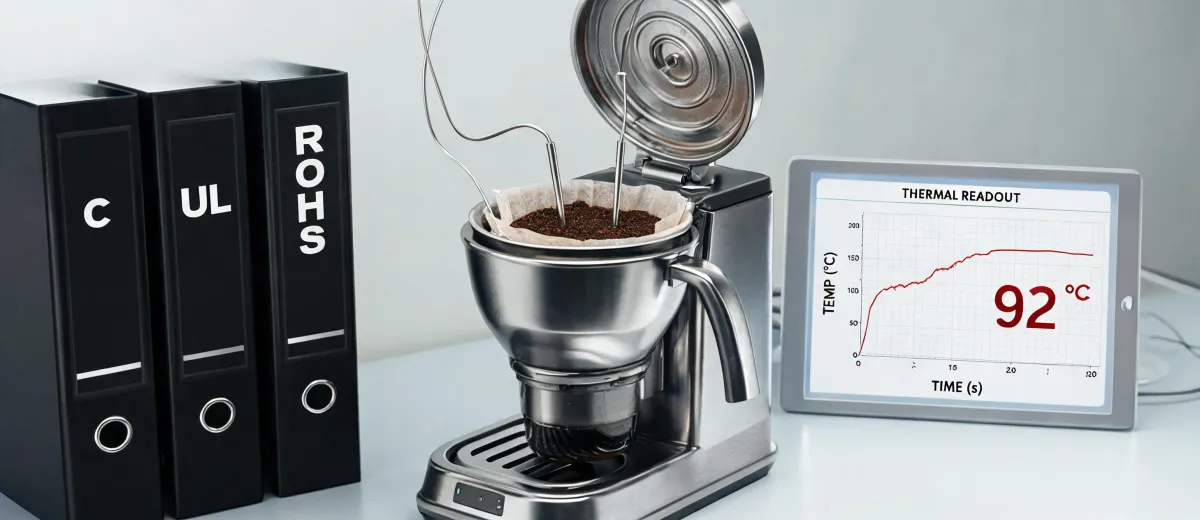
Coffee maker test probes and compliance binders

Buyer-facing engineering outputs

  • Sample validation memo with thermal and flow observations
  • Compliance pathway checklist by target market
  • Packaging dieline and carton protection review notes
  • Spare-part and warranty handling reference for distributors

The lab does not replace third-party certification. It prepares the internal discipline needed before the selected SKU enters external testing or retailer onboarding. Buyers can use these outputs to brief their own QA teams, compare suppliers on evidence quality and decide whether a platform is ready for purchase-order negotiation.

Motor selection: BLDC inverter vs. universal motor

Small kitchen appliance programs split on motor choice. We document both paths so a buyer can match the platform to a price band rather than accept a single sales pitch.

BLDC inverter motor

Delivers roughly 20-40% energy savings and lower noise (around 5 to 10 dB(A) quieter), and its variable-speed control unlocks features such as boost modes and quiet-night operation. It is generally required to reach the top ENERGY STAR and ErP A+++ tiers, but it carries a 30-60% BOM premium and adds firmware dependency.

Universal / induction motor

Backed by a mature global supply chain with 30-50% lower BOM cost and simpler field service. It is sufficient for entry-tier kitchen appliances and wired formats with no firmware dependency, at the cost of higher noise and lower efficiency. The trade-off is real: it cannot reach the highest efficiency tiers some retailers now require.

Ask for a technical file before you ask for a low price.

We can walk your QA, compliance and sourcing teams through the validation plan for your target coffee maker platform.